

기반구축사업단 연구 포스터(2025년 한국운동재활학회ㆍ협회 추계학술대회) : 조예진 총괄센터장 외 (2)
페이지 정보

본문
2) 저자 : Yea Jin Jo, Jae Ang Sim, Moon Hee Kim, Woo Su Kim, Yun Sub Lee, Hyung Wook Park, Songyi Kim, Eun Surk Yi
3) 초록 :
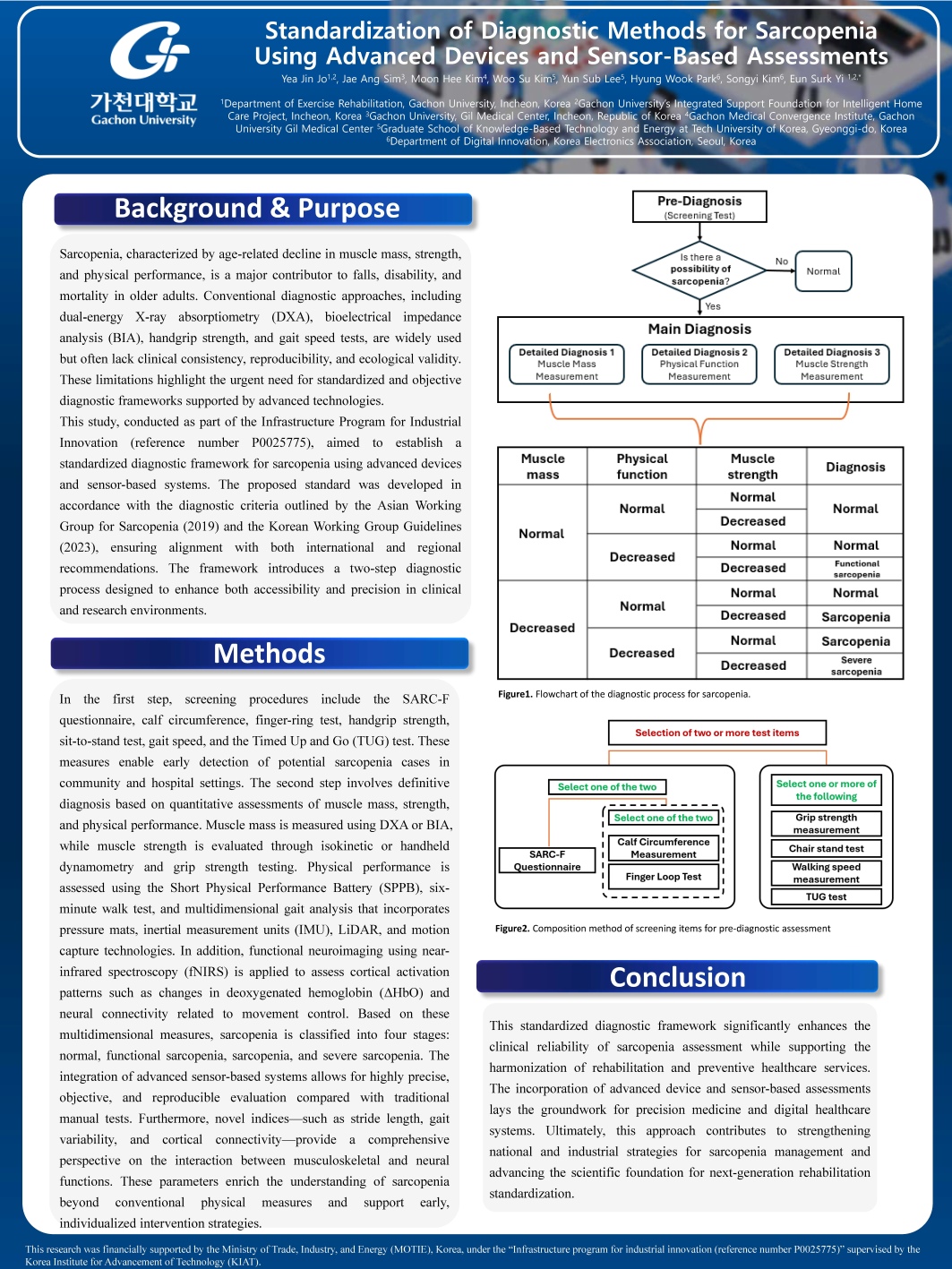
Sarcopenia, characterized by decreased muscle mass, strength, and physical performance with aging, is strongly associated with falls, disability, and mortality. Conventional diagnosis relies on DXA, BIA, handgrip strength, and gait speed tests, but lacks clinical consistency and reproducibility. This study, conducted as part of the infrastructure program for industrial innovation (reference number P0025775), aimed to establish a standardized diagnostic framework for sarcopenia using advanced devices and sensor-based systems. The standard was developed based on the Asian Working Group for Sarcopenia (2019) and Korean Working Group Guidelines (2023). Diagnosis is a two-step process: (1) screening with SARC-F, calf circumference, finger-ring test, handgrip strength, sit-to-stand, gait speed, and TUG test; and (2) definitive diagnosis assessing muscle mass, strength, and physical performance. Muscle mass is measured by DXA or BIA; strength by isokinetic or handheld dynamometry and grip strength; and performance by SPPB, 6-min walk, gait analysis (pressure mats, IMU, LiDAR, motion capture), and functional neuroimaging (fNIRS: DHbO, functional connectivity). The standard classifies sarcopenia into normal, functional sarcopenia, sarcopenia, and severe sarcopenia. Integration of sensor-based systems enables precise and objective evaluation compared to manual tests. Novel indices, such as stride length, gait variability, and cortical connectivity, provide a multidimensional perspective for sarcopenia diagnosis. This standardized diagnostic method enhances clinical reliability and supports the standardization of rehabilitation services. Incorporating advanced device and sensor-based assessments establishes a foundation for precision medicine and digital healthcare, strengthening national and industrial strategies for sarcopenia management.

- 이전글기반구축사업단 연구 포스터(2025년 한국운동재활학회ㆍ협회 추계학술대회) : 최준수 센터장 외 25.11.11
- 다음글기반구축사업단 연구 포스터(2025년 한국운동재활학회ㆍ협회 추계학술대회) : 조예진 총괄센터장 외 (1) 25.11.11
댓글목록
등록된 댓글이 없습니다.